top of page


Stories from CPALI


Tanana Madagascar x Selvedge Artisan Goods
A specially crafted collection of woven raffia cloth conveys Betsimisaraka culture, connects generations of women, and advances locally led regeneration of a fragile forest ecosystem.
Sep 29


Tanana Madagascar x Ibu Atelier
In the transformative power of women’s hands, the Tanana Madagascar capsule collection cultivates enduring impact through artistry, innovation, and collaboration
Sep 23


Culture in Cloth
Sustaining the disappearing art of woven Betsimisaraka raffia cloth.
Sep 23


The Apprentice: Sericulture Edition
Launched in 2026, the CPALI-SEPALI Madagascar sericulture initiative is training a new generation of young farmers in the science and art of wild silk production. Under this exciting new program, everybody wins.
Sep 14


Tanana Madagascar x Proud Mary
From Wild Silk to Fine Art: A New Collaboration with Proud Mary What happens when rare Malagasy wild silks meet the imagination of the local artisan team behind our regenerative textiles? A new collection of five original artworks created by Tanana Madagascar in collaboration with Proud Mary offers one beautiful answer. "The vibrant colors, abstract imagery, radiant silk and sense of movement immediately captivate. When local artisans are given freedom to create with regenera
Aug 31


Ancient symbol, living craft
Introducing a new, limited-edition Tanana Madagascar contemporary textile artwork that celebrates cultural heritage in rare silk. Pictured: Detail from the 'alo alo' wild silk textile artwork. A limited number of the new tapestry will be released by Tanana Madagascar in Fall 2026. 'Alo alo': Connections through time Crafted from the rare wild silks of Madagascar's ghostly silk moth (Ceranchia apollina) and lappet moth (Callopizoma malgassica), the new Tanana Madagascar 'alo
Aug 27


Pause and reflect: Six months, six areas of impact
In northeastern Madagascar the future of conservation depends on families who live alongside nature seeing fair benefits from sustaining biodiversity. In the first half of 2026, CPALI and SEPALI Madagascar continued to work hand-in-hand to deliver an impact-driven social enterprise and to advance initiatives that strengthen economic lives, regenerate nature, and elevate innovative local ideas in one of the world's most precious biodiversity hotspots. At the mid-year point, jo
Jul 29


'Zavamaniry': Things that Grow
'The Art of Craft', an exhibition opening July 23, 2026 in Charleston, South Carolina at the Allegory Art Collective, will bring together original works commissioned from artisans across Mexico, India, Namibia and Madagascar. 'Folera Mena,' an original wild silk tapestry by Tanana Madagascar artisans, is among the selected works that will be exhibited this July through September.
Jul 6


Transformative Conservation Inspired by Insects
Mamy Ratsimbazafy, entomologist and Founder of SEPALI Madagascar, shares his insights on purpose-driven leadership and the importance of putting local values first in conservation. From insect scientist to founder - An entomologist by training, Mamy Ratsimbazafy leads Sehatry ny Mpamokatra Landy Ifotony, the Organization of Wild Silk Producers (SEPALI Madagascar). His organization works hand-in-hand with Conservation through Poverty Alleviation International (CPALI) to delive
Jun 10


Regenerative by Design
Lalaina Raharindimby, Lead Artisan for the social enterprise Tanana Madagascar, shares her insights on value leadership. And on how nature-inspired design is helping improve local economic lives and preserving cultural arts in a critical biodiversity hotspot.
May 29


Purpose in every thread: Celebrating four years with Tanana Madagascar
Kyley Schmidt, outgoing General Manager of CPALI's social enterprise, reflects on how the venture has grown and what she'll take away as she embarks on her next chapter. Kyley Schmidt and Lalaina Raharindimby display Tanana Madagascar textiles at the Shoppe Object New York Global Artisan Project pavilion in Fall 2024. (Photo: Tanana Madagascar) When you first joined CPALI to oversee Tanana Madagascar, what drew you to the organization's mission? During my Peace Corps service
Mar 16


A Year of Impact: Highlights from CPALI’s New Annual Report
"We’re built on a simple belief: that local ideas can create transformative change. In this annual report, we proudly outline latest measures of our impact and extend gratitude to all who help our innovative conservation model to succeed." Rachel Kramer, CPALI Executive Director Changing Lives and Landscapes The newly released Annual Report from Conservation through Poverty Alleviation International (CPALI) shares stories and milestones from the past year. It explores how loc
Mar 10


Reflecting on two decades with CPALI
Leslie Brunetta, long-time CPALI Board Director and Clerk (2004-2025) and co-author of Spider Silk: Evolution and 400 Million Years of Spinning, Waiting, Snagging and Mating (Yale University Press 2010) with CPALI Founder Dr. Catherine Craig, reflects on two decades of service to the organization, and what she's learned watching CPALI grow from idea to impact. Leslie Brunetta (Photo credit: Petra Silton/CPALI) Twenty-plus years ago, I joined CPALI as a favor to my friend and
Dec 23, 2025


Iterate, Refine, Test: Biochar Bricks
Converting invasive plants into a nature-positive local fuel source Over the last year, the SEPALI Madagascar agroforestry and biochar team has used a CPALI seed grant to iterate fuel "bricks" made from invasive water hyacinth combined with local seeds and cemented with banana glue. These team-developed biochar bricks are now powering specially-designed cookers to reduce charcoal and firewood consumption for dye baths at our artisans workshop in northeastern Madagascar. Next
Oct 29, 2025


Winged Wonders: Exploring Madagascar's Wild Silk Moths
Take a closer look at the endemic species behind CPALI's Nature-based Textiles Initiative. Pictured: An Antherina suraka wild silk moth in northeastern Madagascar. This endemic moth's brown silk cocoons are sustainably collected by local farmers and converted into Certified Wildlife Friendly and Fair Trade textiles by SEPALI Madagascar artisans in partnership with CPALI. The shared social enterprise, Tanana Madagascar, connects wild silk textiles to fair markets to generate i
Oct 24, 2025


Lemurs in the Limelight
Each October, the World Lemur Festival helps raise awareness of lemurs and the ongoing effort to conserve these imperiled primates and their habitats together with local communities. Inspired by children's drawings, CPALI's sister artisans in northeastern Madagascar have designed a line of lemur-themed textiles that celebrate many iconic species. Certified Wildlife Friendly and Fair Trade, every lemur made by local artisans for the collaborative social enterprise, Tanana Mada
Oct 22, 2025


Fabriola’s Story: Motherhood and Opportunity
At dawn, before the first rays of sun touch Madagascar's Bay of Antongil, Fabriola is awake. She prepares for her day, cares for her young son, and cooks with rainwater brought home from work. Life as a young mother in rural Madagascar (or anywhere, for that matter) leaves little room for rest — and even less for certainty. But this year, Fabriola looks to the future with confidence, thanks to her return to work. Fabriola sews wild silk cocoons on a Singer sewing machine. Wh
Sep 22, 2025


Operation: Water Point
Thanks to a new rainwater catchment system that arrived by boat from the capital this week, all artisans and technicians on the SEPALI Madagascar team now have access to clean water and sanitation drops to help keep them and their families healthy.
Sep 18, 2025
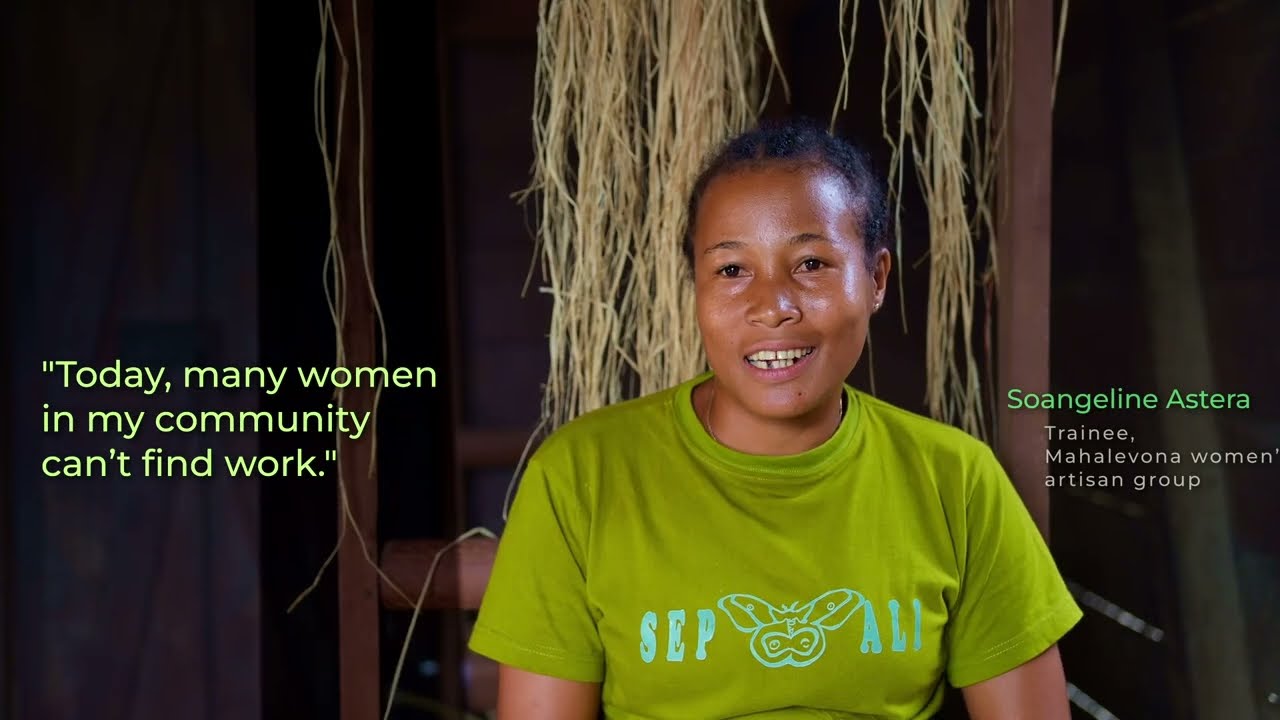
Textiles of change: Village-based artisans & nature-inspired designs
Scaling opportunities for village women to participate in nature-based enterprise can help advance conservation and deliver livelihood...
Jul 31, 2025


Honoring CPALI's retiring founder Dr. Catherine Craig
At the end of June 2025, Dr. Catherine Craig formally retires from the Board of Directors of Conservation through Poverty Alleviation...
Jun 23, 2025
bottom of page